
Such isolated accounts do not provide an adequate safety profile and may reflect both peptide and product specific risks. This loophole is commonly used for experimental drugs sold on the grey market.
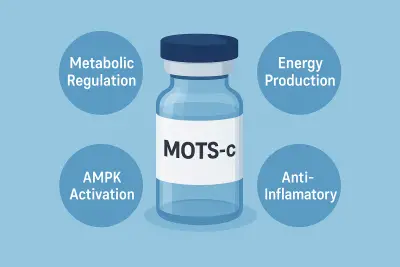
Product formulation may change the specific risk type (but all unapproved MOTS-c products), regardless of form, lack official validation for safety, sterility, composition, or legal compliance. Product claims diverge considerably — with no authoritative oversight or endorsement. Absence of approved MOTS-c products results in no standardized labeling (validated dosage guidelines), or consensus on administration protocol.
Both activate AMPK, but they act on different primary tissues , metformin on the liver, MOTS-c on skeletal muscle,. It’s common enough that it has a name in peptide communities, and it’s usually explained as a straightforward histamine or mast cell response. Both activate AMPK, just in different tissues , metformin in the liver, MOTS-c in skeletal muscle,.
Storage requirements follow standard peptide guidelines. A common reconstitution creates approximately 3.33 mg/mL concentration. Add bacteriostatic water slowly to the vial, directing the stream down the side rather than directly onto the powder.
Is MOTS-C a Fat Loss Peptide?
If you’ve been chasing better endurance (faster recovery), and leaner composition—but hitting walls with traditional fat burners or training plateaus—MOTS‑c could be exactly what your protocol is missing. → Chronic daily use may dull metabolic signaling→ Longer cycles (6+ weeks) haven’t been studied in humans and could backfire → MOTS‑c mimics exercise and caloric restriction — so using it without proper diet or training greatly reduces its effect→ Skipping fasted cardio, overeating, or poor sleep will blunt fat loss and mitochondrial response
This concentration enables convenient dosing with standard insulin syringes where 0.1ml (10 units) delivers 0.5mg. Bacteriostatic water serves as the standard diluent, with the benzyl alcohol preservative extending stability of the reconstituted solution. While flat doses dominate clinical trials, weight-based adjustments may optimize individual protocols. Goal-specific adjustments optimize MOTS-c protocols for particular outcomes. This insulin-independent glucose disposal makes MOTS-c particularly interesting for metabolic conditions involving insulin resistance.

Who MOTS-C Is FOR (And Who It’s Not)
That said (within research and peptide communities), certain patterns have emerged in terms of how it’s typically discussed. Because MOTS-c is still a research-stage compound in many contexts — there isn’t a single standardized dosing protocol the way there might be for an approved pharmaceutical. This has fueled interest among those researching body composition, though it’s far from a settled area of science. Because MOTS-c is tied directly to mitochondrial function, some researchers believe it may support how efficiently the body converts nutrients into usable energy. That origin story alone has made it a favorite topic among researchers interested in metabolism, energy, and aging. People taking metformin or other AMPK-activating drugs should discuss potential interactions with their physician.
Completely different mechanisms, zero overlap. The most common pairing is MOTS-c with BPC-157. MOTS-c pairs well with other compounds because it works through AMPK activation rather than receptor binding. Some people report visible changes in body composition over 4-6 weeks, though this is hard to separate from training and diet variables. Checkout takes cards, Apple Pay, or Zelle , another 10% off,, standard shipping is free over $150, and the free account you need to order takes an extra 25% off your first order, sale prices included.
Some researchers exploring “stacking” — using multiple peptides together — do so because these compounds are believed to act on different systems, theoretically allowing for a more comprehensive approach depending on the research objective. If you’re just starting to look into MOTS-c (this guide walks through what it is), how it’s believed to work, why it’s generated interest around energy and metabolic health, how people commonly approach dosing, and what the potential downsides look like. This stack is particularly common among patients in their 40s and 50s who want to maintain training intensity while managing the wear-and-tear injuries that accumulate with age. Stacking is common in clinical practice — though no controlled studies have evaluated specific MOTS-C combinations. Some longevity researchers view MOTS-C as a more targeted, peptide-based alternative to metformin’s metabolic effects. MOTS-C is different — it’s encoded in mitochondrial DNA (mtDNA), specifically within the 12S rRNA gene.
→ Supports metabolic flexibility in both fasted and fed states→ Useful for individuals with insulin resistance or post-cycle metabolic slowdown→ May complement fasting, low-carb, or Clean Carbs strategies for performance athletes However, exogenous administration , via peptide injection, amplifies these effects—especially in cases of metabolic dysfunction, aging, or intense training. It plays a central role in metabolic homeostasis (helping regulate glucose metabolism), fatty acid oxidation, and cellular stress response.

Once reconstituted, refrigerate at 2 – 8 °C and use within about 28 days; that window is set by the benzyl alcohol preservative in bacteriostatic water, not by any published MOTS-c degradation study. Add bacteriostatic water slowly down the inside wall of the vial, swirl gently rather than shaking, and let it dissolve fully over a couple of minutes. In Reynolds 2021 — skeletal muscle from MOTS-c-treated mice showed significant metabolic changes only in animals that had exercised; non-exercised mice showed no significant alteration.
What it is not is evidence that injecting MOTS-c replaces training in humans. MOTS-c acts primarily as a metabolic regulator — through two mechanisms that are worth distinguishing. At Drip Lounge (she applies the same diagnostic discipline and safety standards she developed in high-stakes hospital environments to deliver care that is thoughtful), precise, and deeply personalized.
This is one reason researchers describe MOTS-c as part of the body’s exercise response. In healthy men, a bout of exercise raised MOTS-c levels in skeletal muscle and blood. No trial has shown that MOTS-c causes weight loss in humans — so any fat-loss effect in people is unproven. User reports are mixed and often involve other compounds at the same time. A good COA confirms what is in the vial; it does not make the compound safe to use. Because it is unregulated, purity and the actual amount in each vial vary between suppliers.
In essence (it aligns more closely with humanin—a peptide derived from mitochondria—and with AMPK-activating agents such as metformin), relying on a peptide signaling mechanism instead of a small-molecule approach. Some individuals utilize MOTS-c in seasonal cycles lasting 12 weeks (two to three times annually), while others implement it during specific phases of training or for targeted metabolic enhancement. It is advisable to take it in the morning on days without training. After reconstitution, it generally maintains stability for about 30 days, though adherence to the storage instructions on the label is recommended.
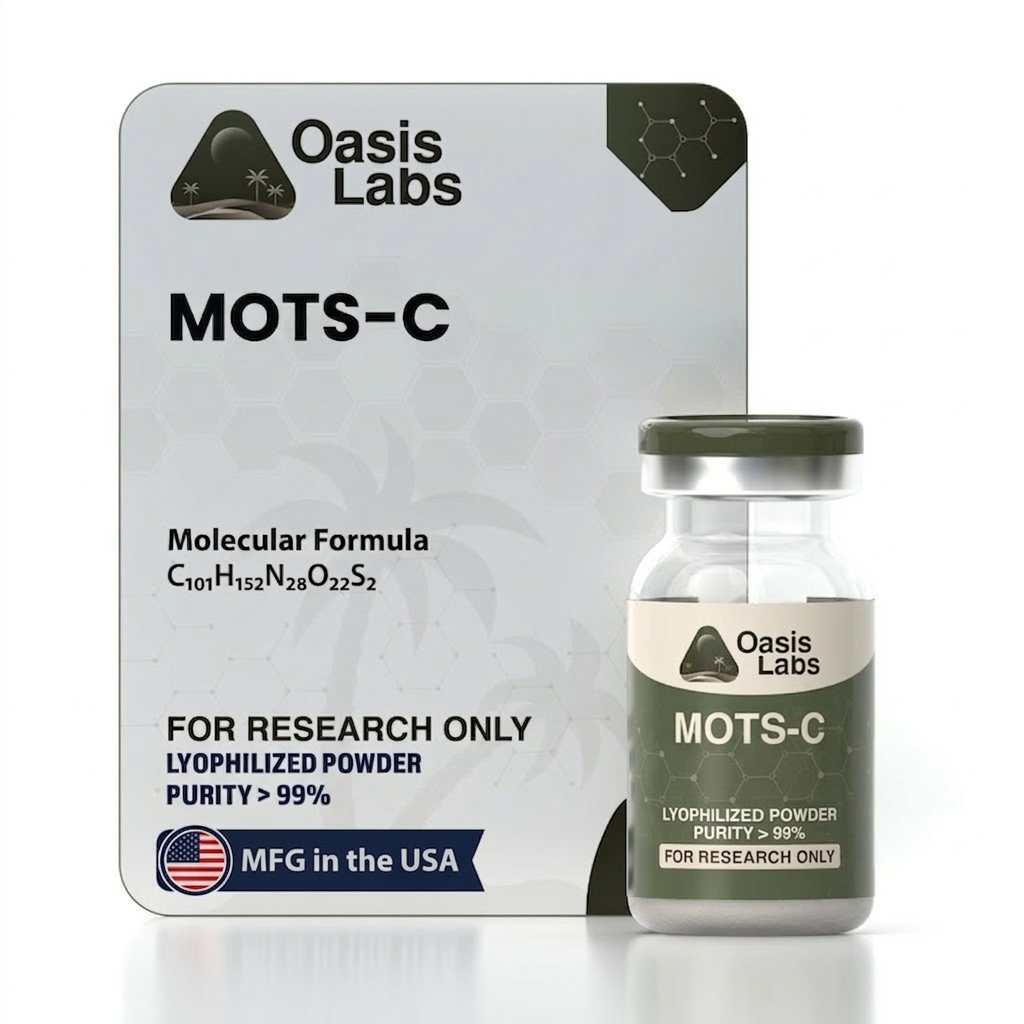
Reports of side effects are more frequently associated with evening doses — likely due to the metabolic activation effect coinciding with bedtime. There are no human studies available for native MOTS-c, so dosing guidelines are derived from the experiences of researchers and practitioners familiar with the compound. It remains uncertain whether standard MOTS-c elicits comparable effects in humans when administered at conventional research dosages. CB4211 has a distinct structure, designed specifically to enhance stability and pharmacokinetic properties.